
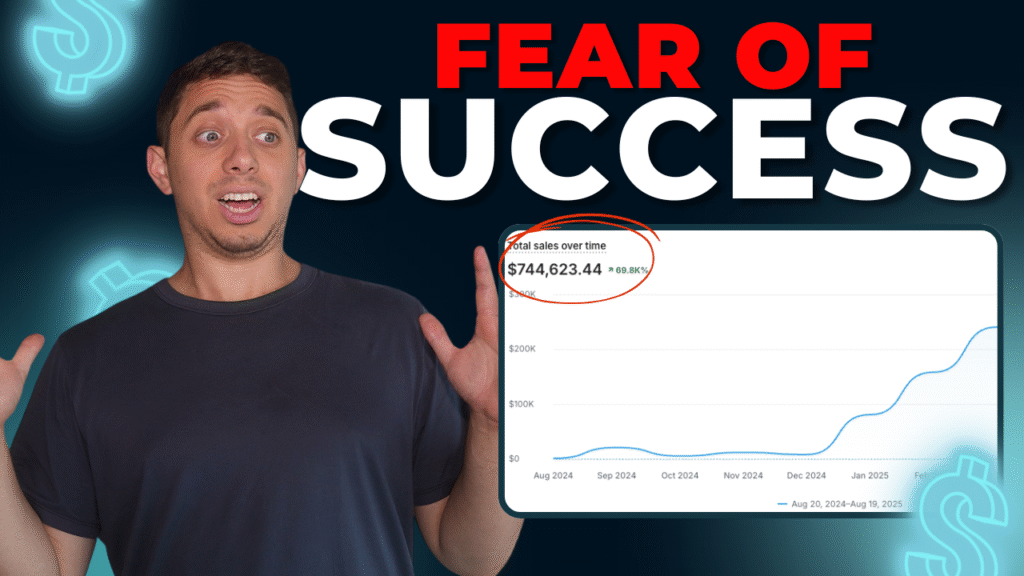
The Fear You’re Not Talking About: Why Many Entrepreneurs Are More Afraid of Success Than Failure
Most people think their biggest obstacle in business is the fear of failure. In reality, many entrepreneurs are far more afraid of success. Winning brings visibility, responsibility, higher expectations, and change. Those shifts trigger resistance, even in the most ambitious founders.
This fear rarely announces itself directly. Instead, it hides behind smart sounding strategies, endless improvements, and constant preparation. In this article, we break down what fear of success really looks like in your brand, why the brain creates it, and how to beat it with practical steps you can start this week.
How Fear of Success Shows Up in Your Business
Fear of success rarely says “I’m scared to win.” It disguises itself as progress, strategy, and perfection. Here are the most common patterns:
The Perfection Loop
You are always almost ready to launch. New products, new pages, new ads. There is always another tweak to make. You delay the moment your work goes live because going live means getting judged.
Scope Creep
A simple offer slowly becomes a massive menu. More color options. More bundles. More upsells. It feels like growth, but it is really a way to avoid shipping.
Safe Problems
You obsess over fonts, packaging tape, or minor details instead of focusing on the real levers: the offer, the traffic, and the follow-up.
Mystery Math
You avoid the numbers that matter such as CAC, AOV, and LTV. If you never look at the math, you never have to scale.
Sudden Fatigue
When momentum builds, you suddenly become too busy or too tired. The timing always seems off. But patterns do not lie.
If two or more of these feel familiar, fear of success is already influencing your decisions.
Why the Brain Creates This Fear
The brain’s job is survival, not growth. Success introduces new identity risks, social exposure, and potential loss. Here are the main triggers:
Identity Threat
Winning shifts your identity. You can no longer be the underdog or the hustler. You become responsible. That weight creates resistance.
Loss Aversion
Success usually means more orders, more eyeballs, and more pressure. The brain naturally values potential losses more than potential gains.
Social Threat
With success comes attention, and attention brings judgment. The brain interprets judgment as danger.
So the brain protects you by creating smart delays and endless places to hide.
The Three Lies Fear of Success Whispers
To stay “safe,” fear uses three common lies:
- It’s not ready.
If you never launch, you never face judgment. - I need one more thing.
Perfection becomes the ultimate shield. - Growth will break everything.
If things might get messy, you convince yourself to avoid growth entirely.
You do not defeat these lies with motivation. You beat them with clarity and systems.
The Three M’s That Beat Fear: Mindset, Mechanics, and Measurement
1. Mindset
Your goal is not to become fearless. The goal is to make success feel safe and familiar. You do this by creating small wins on purpose.
Three quick mindset tools:
- Name the fear.
Write: I am afraid that if I grow, ___ will happen.
Naming the fear reduces its power. - Shrink the win.
You do not need to scale to seven figures. Just ship one offer. Run one ad. Email one list. - Predetermine your response to chaos.
Write a plan for what you will do when orders spike or overwhelm hits. When chaos has a plan, fear loses its excuse.
2. Mechanics
Build systems that make success feel manageable.
Simplify the Offer
Choose one hero product. Limit variations to three. Add a bonus such as a simple bundle or free shipping threshold.
Build a Page That Sells
Above the fold, include:
- One clean product photo
- Price
- A short benefit line
- Three quick reviews
- One clear button
If your page needs explanation, it is not finished.
Strengthen Fulfillment
Set realistic shipping windows. Communicate delays early. Include a “Where is my order” section on both the product and cart pages.
Create a Weekly Marketing Rhythm
- Monday: Test one ad with two hooks.
- Wednesday: Email buyers with reviews or use cases.
- Friday: Post community content or a short behind-the-scenes update.
Rhythm beats motivation every time.
3. Measurement
Numbers end emotional debates. Track performance weekly:
- Clickthrough rate: Did the hook land?
- Add to cart rate: Did the page make sense?
- Conversion rate: Did trust hold up?
If all three rise, keep going. If one dips, fix only that part. Avoid the impulse to rebuild everything based on feelings.
The Exposure Ladder: Train Your Brain to Handle Growth
Think of success tolerance like a muscle. You build it gradually.
Level 1: Post one imperfect product video today.
Level 2: Run a ten dollar per day ad for seven days without changing it.
Level 3: Email your list with one clear offer and share one customer win.
Level 4: Announce a small restock date and a quantity. Deliver exactly on time.
Each level builds your ability to handle visibility, demand, and responsibility.
The Identity Shift That Makes Scaling Possible
Stop trying to “be successful.”
Become a builder who keeps promises to customers and to yourself.
Say this before you work: I ship value today.
Then do one action that proves it.
Identity is built through repetition, not inspiration.
A Final Word on Money Beliefs
A common hidden belief is that raising prices scares customers away. But thin margins create subconscious resistance to growth. Improve clarity, photos, sizing, and guarantees, then raise the price with confidence. Your brand becomes easier to scale when your margins support growth.
Success requires systems, not perfection.
When you make winning feel safe for your brain and simple for your operations, fear loses its grip. Start with one small action this week, and let the momentum build.
If you’d like help implementing these systems inside your brand, our team is always here to support you.